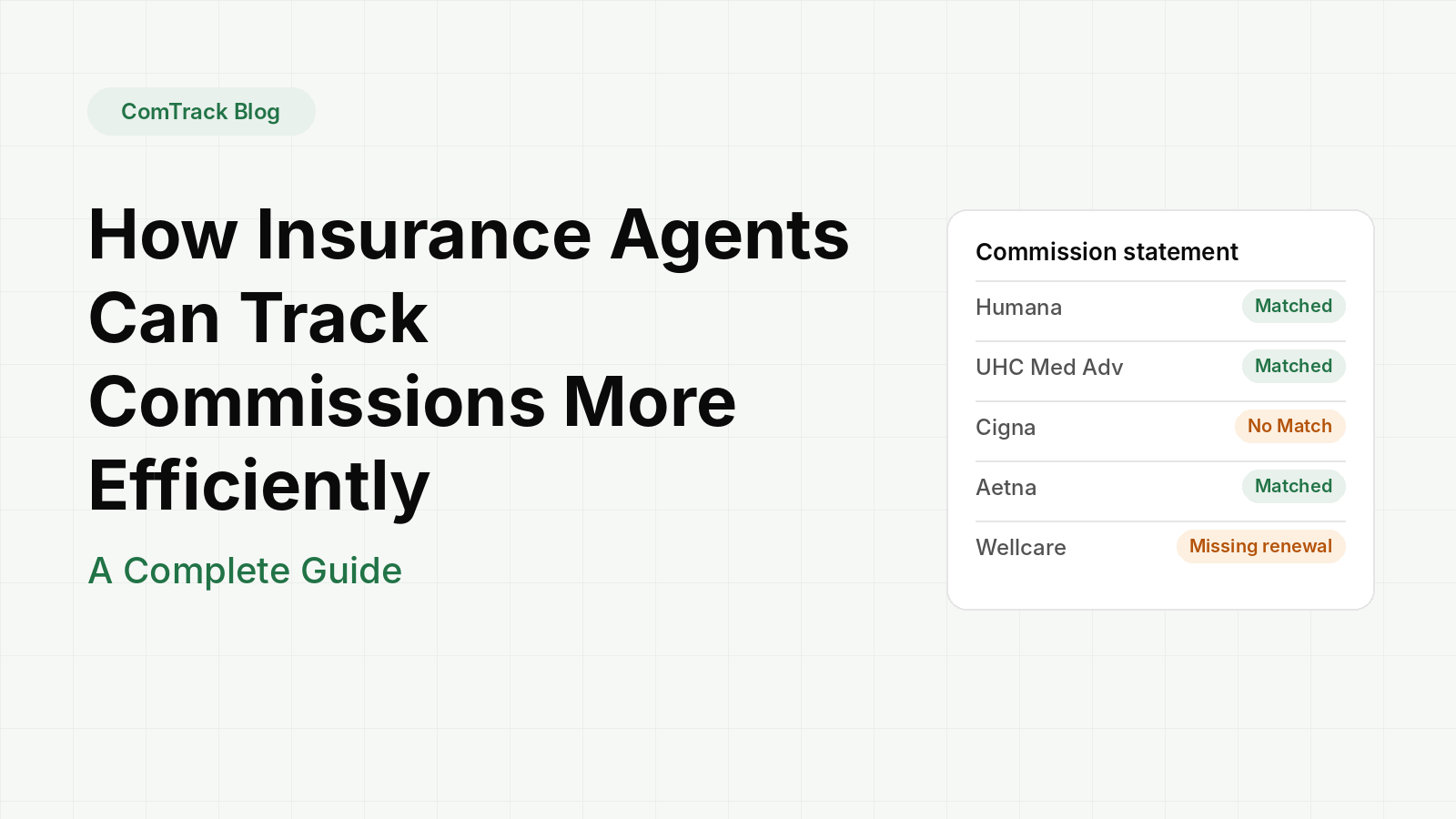
Every insurance agency runs on revenue, but a shocking amount of that revenue slips through the cracks unnoticed.
While agency leaders pour time, energy, and ad spend into acquiring new policyholders, they often neglect the back office where money is earned, reconciled, and paid out.
Tracking insurance commissions sounds simple on paper. A carrier sells a policy through your agency, they collect the premium, and they send you a slice of the profit.
In reality, modern insurance operations deal with dozens of carriers, hundreds of statement formats, complicated agent splits, and dynamic renewal cycles.
When your tracking systems fail, the outcome is predictable: missing insurance commissions, frustrated producers, hours wasted on repetitive paperwork, and silent margin erosion.
Industry studies consistently show that independent agencies lose between 3% and 10% of their commission revenue every single year simply because nobody caught carrier calculation errors or missing line items.
Understanding the most frequent insurance commission mistakes is the first step toward safeguarding your hard earned cash. If you want to put an end to lost insurance revenue and build a bulletproof agency workflow, avoid these seven costly traps.
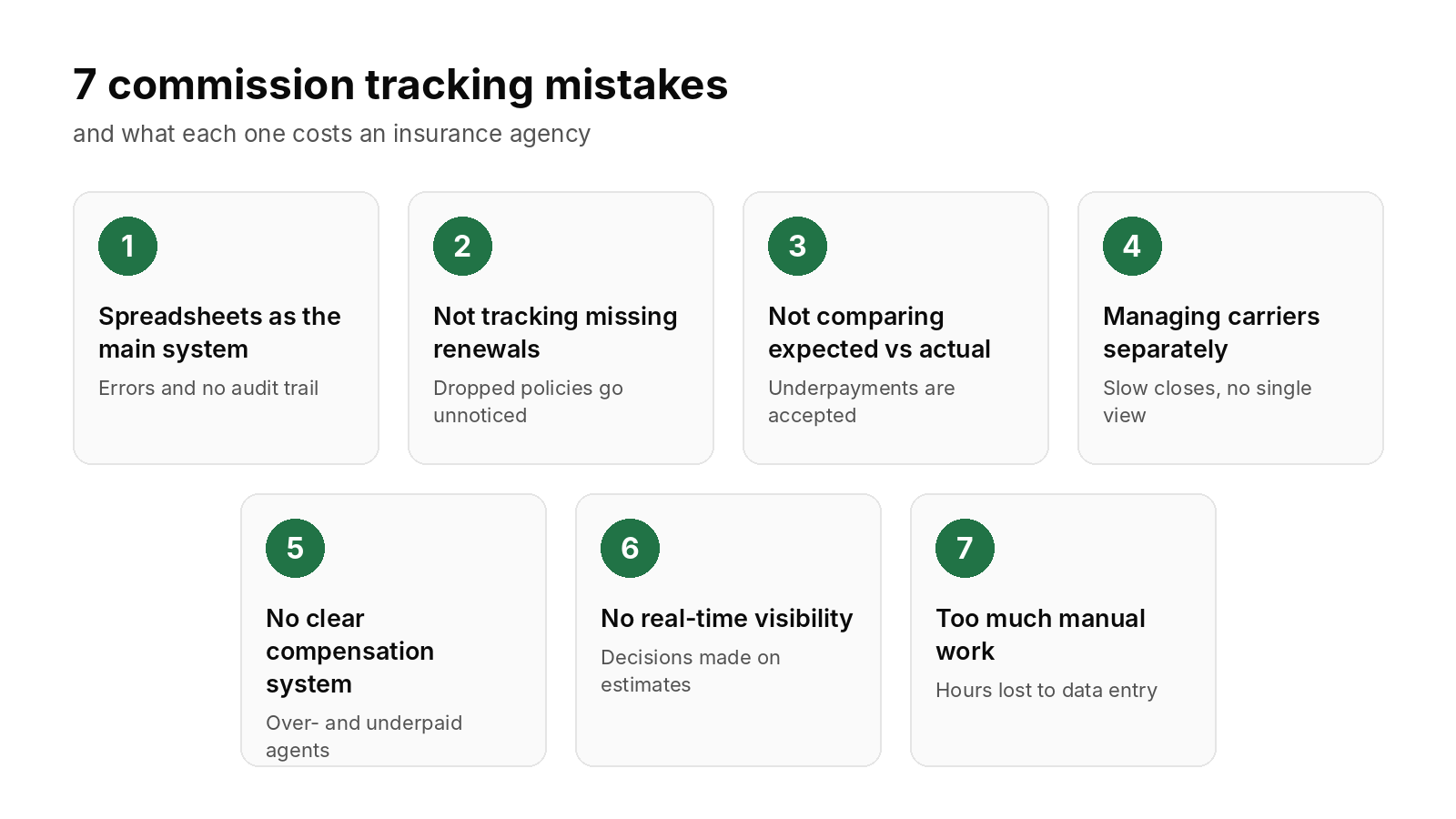
Mistake #1: Using Spreadsheets as the Main Commission System
Spreadsheets like Microsoft Excel and Google Sheets are versatile tools, but they are built for basic calculations, not intricate financial governance. When an insurance agency relies on spreadsheets as its core commission tracking engine, it invites disaster.
The primary issue with spreadsheets is human error. One misplaced decimal point, an accidental row deletion, or a broken formula can instantly skew months of financial data. Because spreadsheets lack audit trails, identifying when an error occurred or who made it is nearly impossible.
Spreadsheets also create severe version control issues. Different team members download copies, make manual tweaks, and save their own versions locally. Within weeks, management cannot tell which workbook reflects the true financial position of the agency.
Furthermore, static spreadsheets do not communicate directly with your Agency Management System (AMS) or carrier portals. Every number must be manually typed or copy-pasted, which drains valuable administrative hours and turns routine bookkeeping into a high stress bottleneck.
Mistake #2: Not Tracking Missing Renewals
Renewals are the lifeblood of an independent insurance agency. They require far less overhead than acquiring brand new accounts, making them the most profitable revenue stream in your book of business.
Yet, failing to track unpaid or dropped renewals remains one of the costliest commission tracking problems in the industry.
Carriers manage hundreds of thousands of transactions every month, and clerical errors on their end are surprisingly frequent. A client might renew their policy on time, pay their full premium, and remain active on your roster, but the carrier might forget to tag your agency ID on the statement.
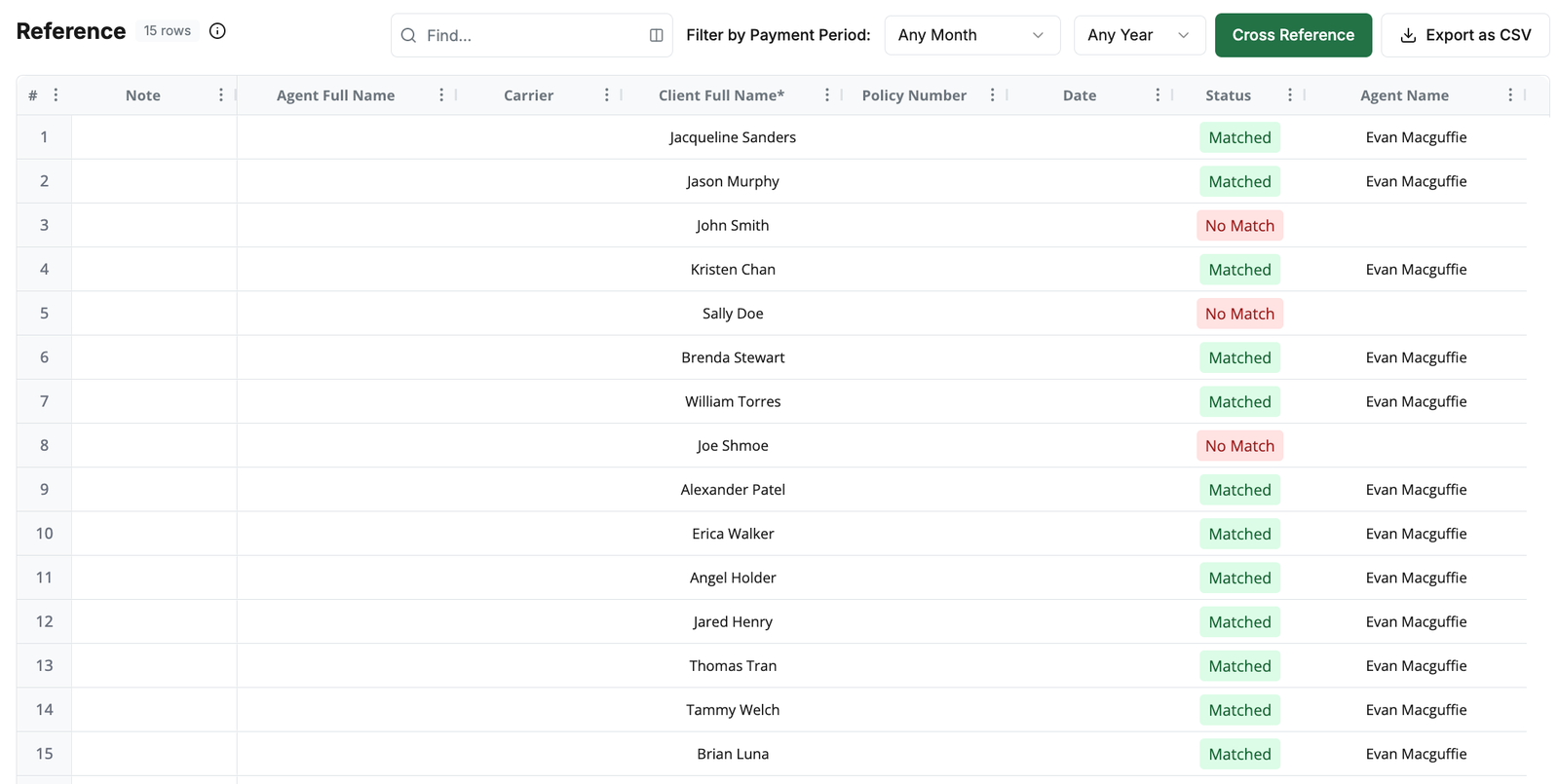
If your team only looks at the policies that appear on incoming carrier statements, you will never catch the policies that were left off entirely. Unless you cross check your internal active policy list against incoming payment files, dropped renewals vanish into thin air.
Over a year, even a handful of missing high premium commercial renewals can siphon tens of thousands of dollars away from your agency.
Mistake #3: Not Comparing Expected vs Actual Payments
Most agencies practice passive accounting: a carrier sends a direct deposit along with an electronic statement, the agency bookkeeper logs the deposit, and life goes on. This passive approach completely skips commission reconciliation.
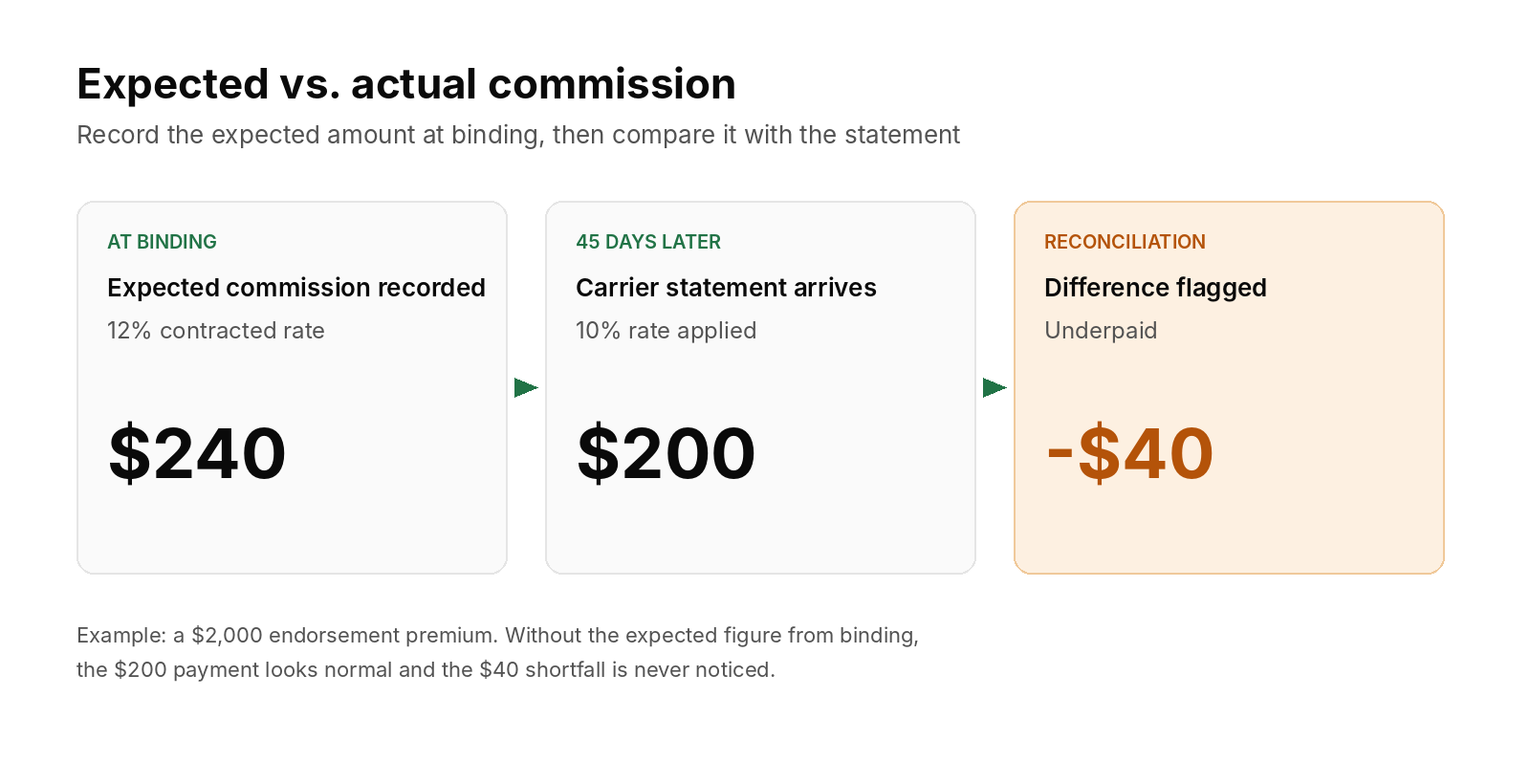
Insurance policies frequently involve mid term endorsements, audits, cancellations, and retro active rate changes. Carriers use algorithmic rating tables and tier schedules that change regularly. If a carrier applies a 10% commission rate on an endorsement instead of the contracted 12% rate, would anyone in your office notice?
Without calculating your expected commission at the time the policy binds, you have no baseline to compare against the actual check that arrives 45 days later. Assuming that carrier statements are always accurate is a dangerous gamble.
Carriers make honest accounting blunders, but it is never their responsibility to track down money they underpaid you. That burden falls entirely on your agency.
Mistake #4: Managing Multiple Carriers Separately
Independence is an agency's greatest commercial strength, but it can quickly become an operational headache. Working with fifteen or thirty different carriers means dealing with fifteen or thirty different statement structures, payment dates, and file types.
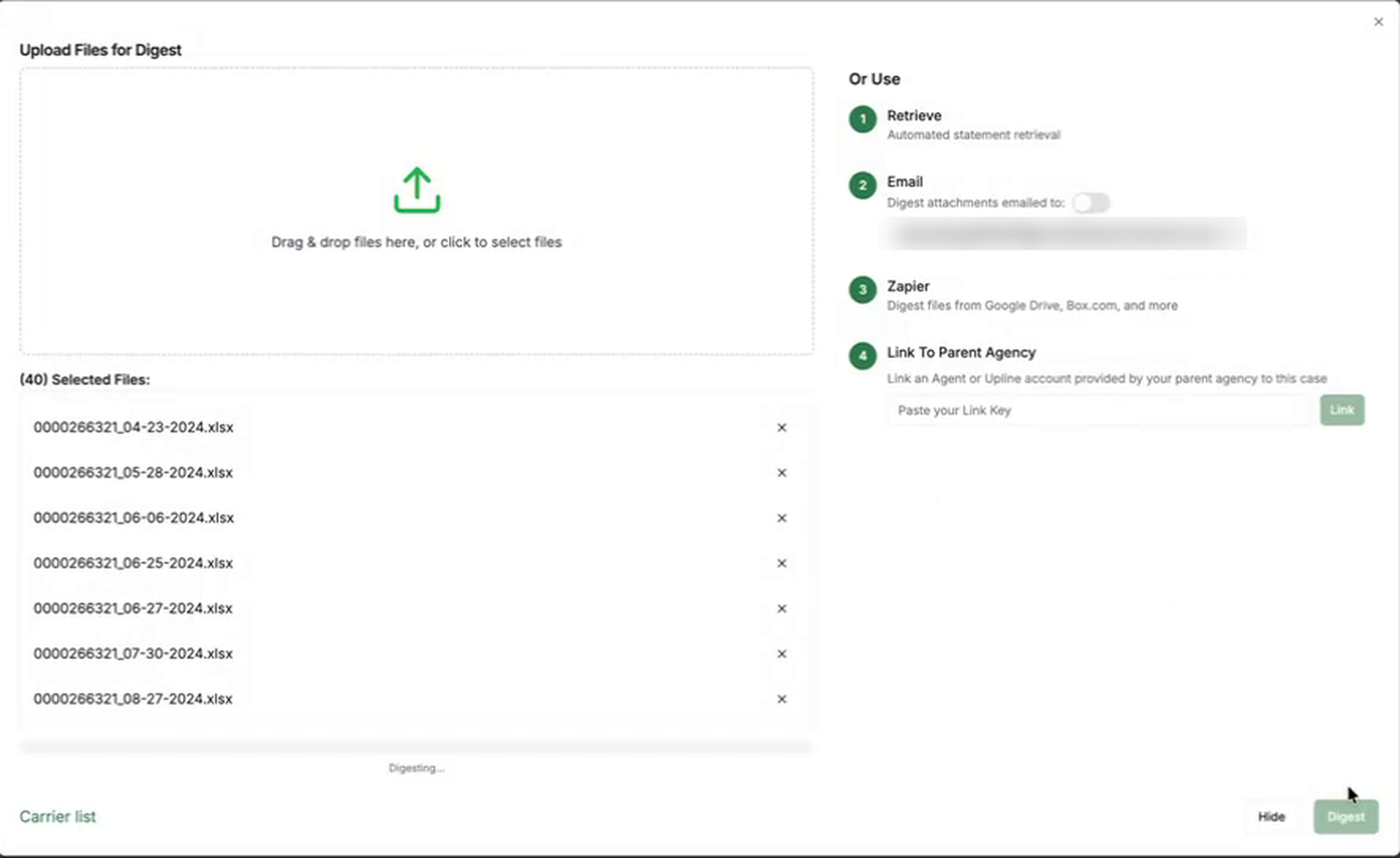
Some carriers provide structured CSV or AL3 data feeds, while others deliver password protected PDFs, scanned paper documents, or simple check stubs. Managing each carrier in isolation creates fragmented silos across your team.
When operations are split carrier by carrier, you lose standard data normalization. An accounting manager must learn the idiosyncrasies of every portal, logging into multiple websites every single week just to assemble basic agency figures.
This lack of standardization slows down the agency workflow, delays monthly closings, and hides overarching carrier trends that could inform better partnership decisions.
Mistake #5: No Clear Agent Compensation System
Producers drive growth, and they expect to be paid accurately and promptly. Unfortunately, messy internal commission splits are a widespread source of friction and financial loss.
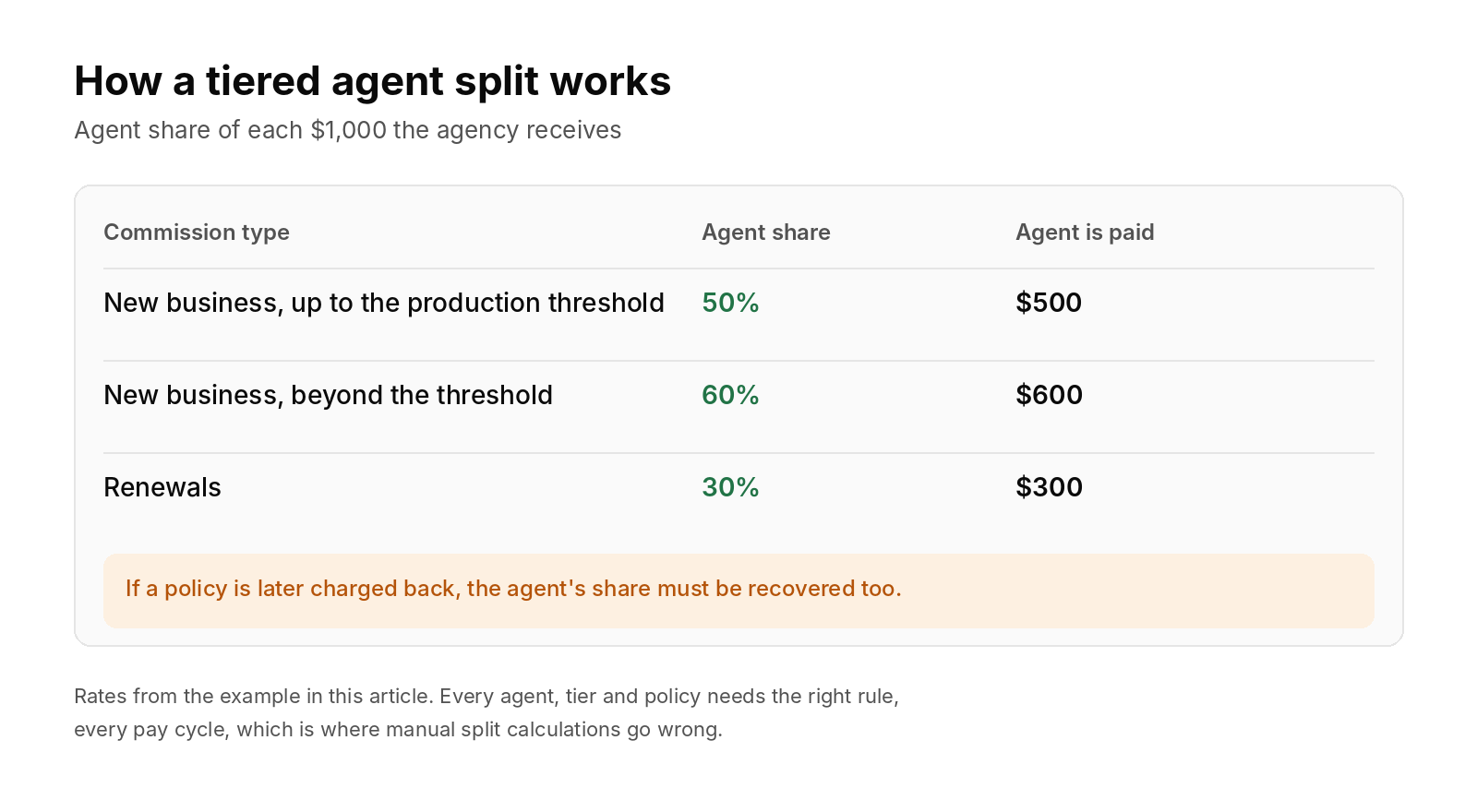
Insurance agencies often use complicated tier schedules. For instance, an agent might earn 50% on new business up to a certain production threshold, 60% beyond that threshold, and 30% on personal lines renewals. Things become even more tangled when multiple agents collaborate on a commercial account or when referral partners receive kickbacks.
Without a centralized, rule based tracking system, calculating these splits manually invites widespread insurance commission errors:
- Overpaying agents on uncollected premiums or cancelled policies subject to carrier chargebacks.
- Underpaying producers, which breeds deep distrust and destroys agency morale.
- Spending days at the end of every month manually auditing producer statements.
A vague or manual compensation system leaves the agency vulnerable to unearned commission drawdowns and producer turnover, both of which cripple operational growth.
Mistake #6: Lack of Real-Time Commission Visibility
Running an agency on delayed data is like driving a car while looking exclusively through the rearview mirror. When commissions are tabulated manually once a month or once a quarter, leadership has zero visibility into real-time cash flow.
Without immediate financial clarity, agency principals cannot make confident decisions about hiring staff, investing in marketing campaigns, or expanding their physical footprint. They are forced to rely on rough estimates instead of clear, real-time facts.
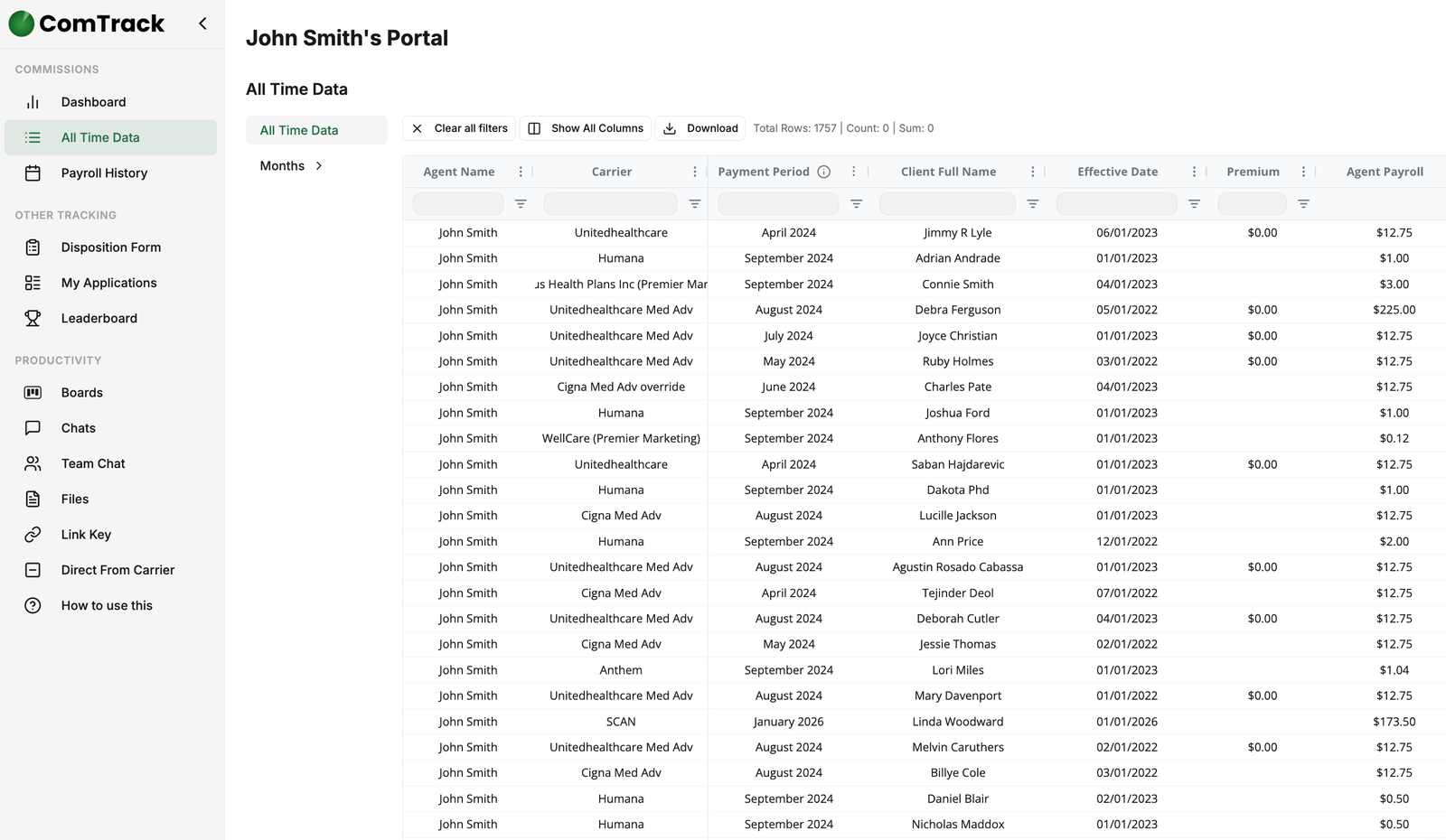
Real-time visibility is equally vital for individual producers. When agents must wait weeks to see how their closed deals translate into compensation, their motivation drops. High performing producers thrive on instant feedback.
When they can check a clear dashboard and see their daily earnings climb, it directly reinforces aggressive sales behavior.
Mistake #7: Spending Too Much Time on Manual Processes
Time is the most valuable asset any insurance professional owns. Every minute an administrative staffer, account manager, or principal spends typing numbers into spreadsheets is a minute taken away from serving clients and closing new accounts.
Manual processing creates an expensive labor trap. As an agency writes more business, its back office paperwork grows exponentially. Agencies caught in this trap often hire more administrative assistants just to handle the mountains of carrier paperwork.
This approach inflates agency overhead without increasing gross sales capacity. When your best people spend twenty to thirty hours every month wrestling with complex reconciliation tasks, you are paying high salaries for low leverage clerical work. Eliminating manual friction is the fastest way to increase operational capacity without increasing headcount.
How Commission Tracking Software Solves These Problems
Modern agencies cannot rely on manual methods to keep pace with changing market conditions. The easiest and most effective way to eliminate these vulnerabilities is to automate commission tracking with specialized software.
Dedicated commission tracking tools fundamentally transform your accounting workflow:
- Automated Data Ingestion: Purpose built software parses messy PDF statements, CSV files, and direct carrier feeds, converting disparate carrier documents into clean, standardized figures automatically.
- Intelligent Reconciliation: The system matches incoming carrier payments against your active policy roster in your Agency Management System, immediately flagging discrepancies where expected revenue does not match actual payouts.
- Leakage Detection: Automated tracking highlights missing renewals instantly, alerting your team before policy grace periods expire or uncollected checks get forgotten.
- Dynamic Split Calculations: You can configure granular commission split rules for each agent, producer tier, or referral partner. The platform applies these rules automatically, calculating payouts down to the penny.
- Live Dashboards: Both leadership and producers gain access to live financial portals that display agency revenue, carrier loss ratios, production trends, and upcoming payouts in real time.
By shifting away from fragile spreadsheets and embracing purposeful automation, you protect your revenue, empower your producers, and build a scalable foundation for lasting agency growth.
Frequently Asked Questions
1. How do insurance agencies lose commission money?
Agencies lose commission revenue through a variety of undetected issues. These include carrier underpayments on endorsements, incorrect commission rates applied by carriers, dropped policy renewals that never appear on statements, uncollected chargebacks, and administrative errors made during manual internal split calculations.
2. How can agents track missing commissions?
Agents and agency leaders can track missing commissions by establishing a strict expected versus actual reconciliation protocol. This involves logging expected commission rates when binding coverage, comparing incoming carrier statements line by line against the active client registry, and leveraging automated tracking software that automatically flags unlisted policies and payment shortfalls.
3. Why are spreadsheets bad for commission tracking?
Spreadsheets lack native integrations with carriers and management systems, requiring hundreds of manual data entry steps that frequently cause typos and formula breaks. They also fail to provide audit logs, version control, or automated discrepancy alerts, making it almost impossible to detect subtle underpayments or dropped line items across multiple carriers.
4. What software helps insurance agencies manage commissions?
Agencies can manage their commissions using dedicated commission management platforms such as AgencyBloc, CommissionTrac, InsuredHQ, or built in financial reconciliation modules within enterprise Agency Management Systems like Applied Epic and Vertafore AMS360.